
INITIATIVE 1 · REUSABLE PP BOXES
Reusable PP Boxes — The Circular Packaging Model
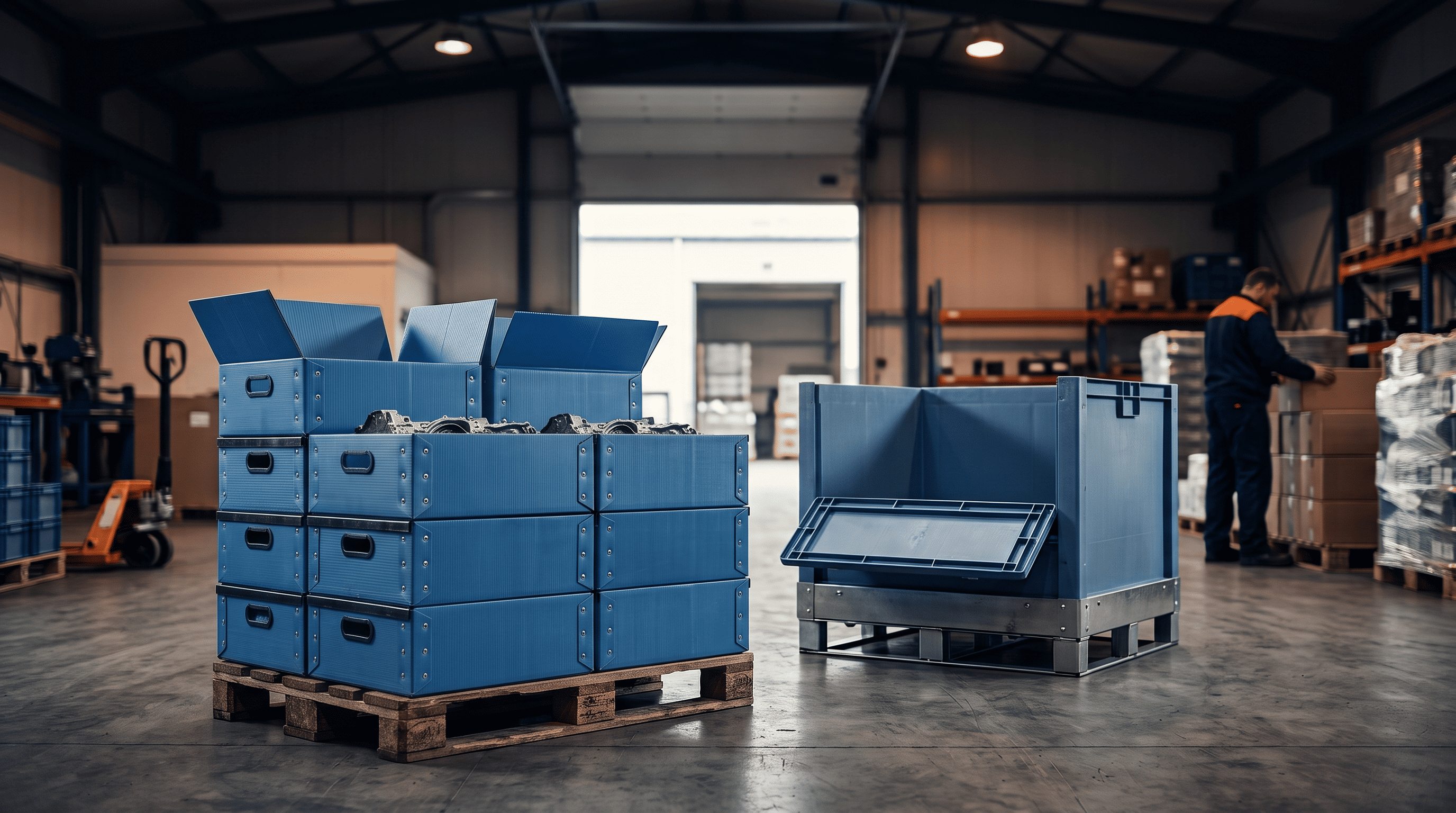
We manufacture reusable polypropylene (PP) boxes for component packaging. Unlike single-use corrugated outers, a PP box is engineered to make the trip 80 or more times — and when the box eventually damages, our customers can send it back to us for in-house refurbishment, extending its life further.
Why This Matters
- A PP box replaces 10 to 15 single-use corrugated outers over its active life
- Less corrugated packaging in circulation means fewer trees felled and less cardboard discarded
- At end of life, the polypropylene re-enters the materials loop through our organised recycling programme — not landfill
- Our customers reduce their long-term packaging cost and their environmental footprint, in parallel
- For packaging we send out — PP boxes carrying our own thermoformed trays, cores and moulded parts to customers come back to us at no additional cost to the customer; we close the loop on our own outbound packaging.
- For packaging we manufacture for customers — PP boxes built for customers' returnable supply chains stay in those customers' loops.
By the numbers
A client partnership example
In a recent two-month window with one of our automotive customers, our reusable-box programme delivered the following:
This is one customer, over two months. Across our full customer base, the impact scales accordingly.
INITIATIVE 2 · MATERIAL RECOVERY
Material Recovery — 20 Tonnes Kept in Circulation Every Month
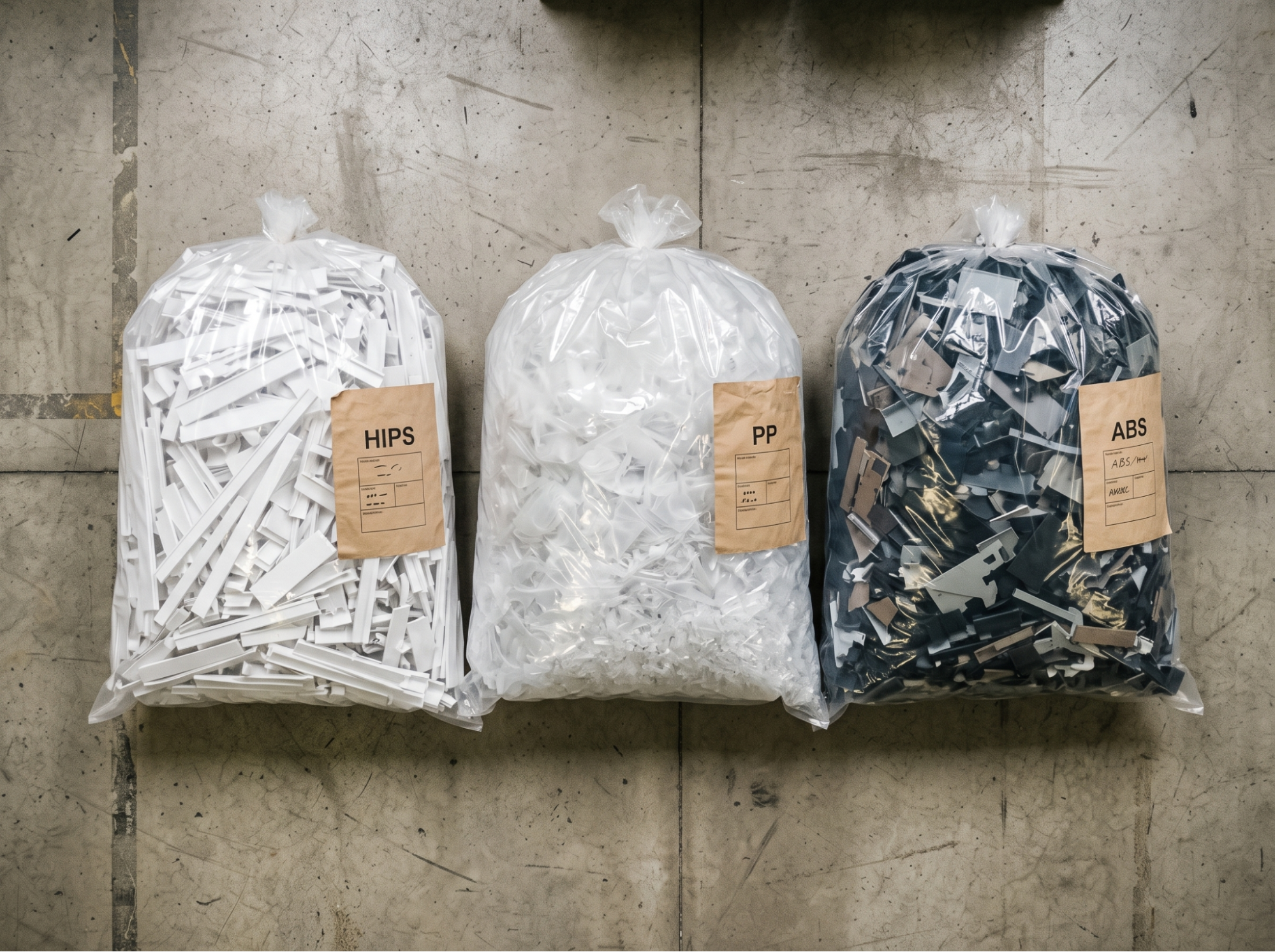
Every manufacturing process generates some trim and post-production material. At AICPL, every gram of it — plastic and metal — is segregated at source by polymer type, documented, and channelled through India's organised recycling stream. Nothing recoverable goes to landfill.
This includes
- Runners and trim from injection moulding
- Trim material from thermoforming production
- Line trim and quality-rejected material from extrusion
- Metal trim from tool-room operations
Every kilogram recovered this way is material that does not need to be extracted, refined and processed from scratch. At twenty tonnes a month, that compounds into real environmental impact.
Initiative 3 · Circular Economy
How We Fit Into the Circular Economy
The circular economy is about keeping materials in use for as long as possible, and recovering them cleanly when a product reaches end of life. AICPL operates at two points in this loop:
At the product level
Our reusable PP boxes and FLCs are engineered for multiple lifecycles. When a container eventually wears out, the polypropylene is fully recoverable — it does not become a disposal problem.
At the material level
Our manufacturing trim and post-production material flow into organised recycling channels, re-entering the materials economy rather than leaving it.
In how we design, as a default
Our in-house design team's instinct is to engineer for reuse first, single-use second. From the first drawing of a cavity to the final despatch of a container, "can this come back?" is a question we ask ourselves on every project.
We believe a packaging company has a particular responsibility to think carefully about what packaging does to the planet. That is why reusability and recovery are core to how AICPL operates — not an afterthought.
WHAT'S NEXT
Our Green Roadmap
AICPL is an honest company. We will not list sustainability targets we cannot verify. What we will say is this: the programmes above are already running, the numbers above are real, and we are actively looking at what comes next.
Our near-term work focuses on expanding the reusable-container footprint across more customer loops, tightening traceability on every polymer stream that enters and leaves our plant, and increasing the share of recycled and bio-based feedstock in our product lines where quality and regulation allow.
Talk to Us About Reusable Packaging